
spanakopasta
greek classic 🤝 one-pot pasta

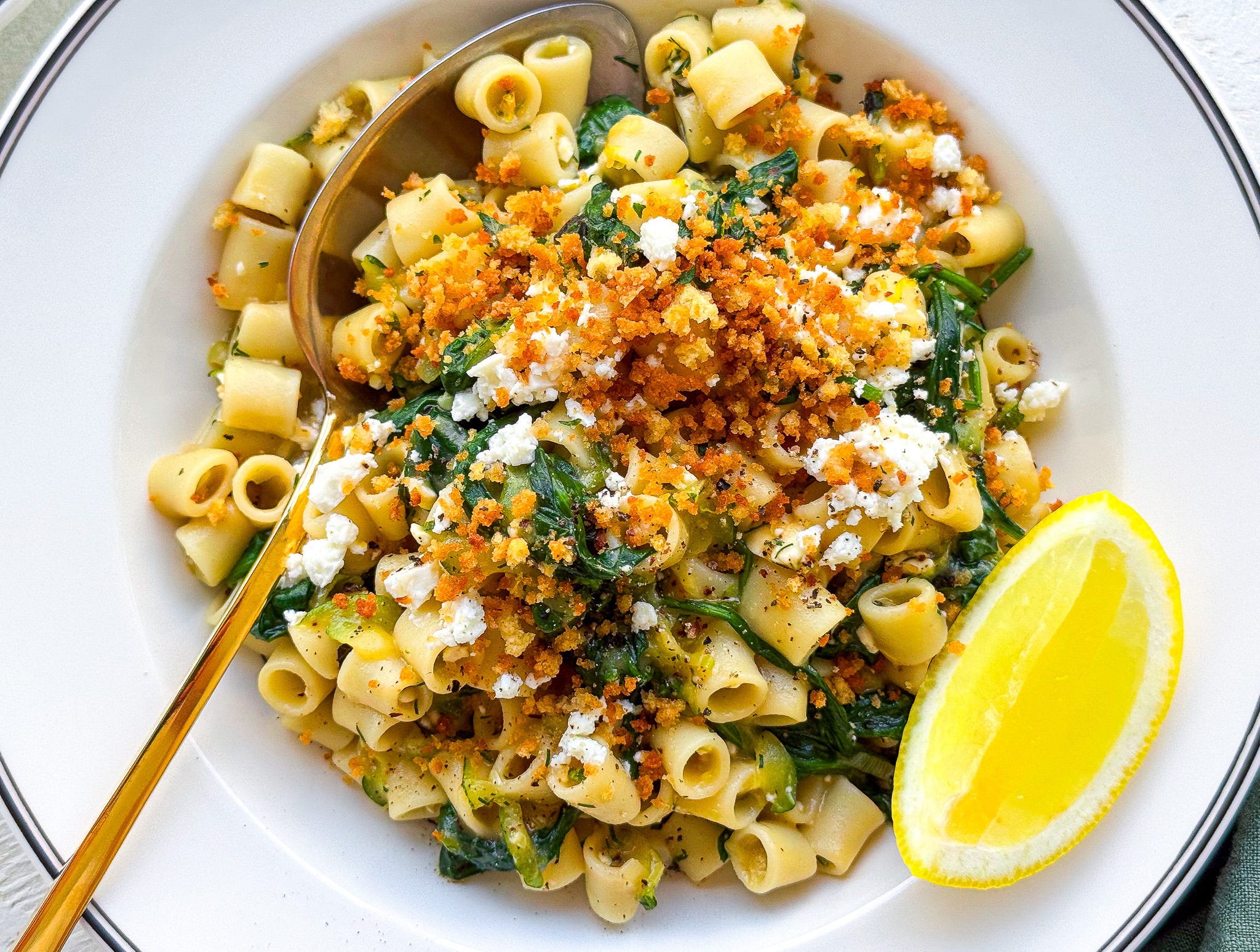
My dreams might be filled with Italy’s la dolce vita, but my summer table is more often laden with delights from its Mediterranean neighbor: Greece. Among my fondest food memories is one from Athens when I was 16, on a rooftop overlooking the Parthenon, its ancient columns awash in gold like a forgotten crown reaching for the god it once worshipped. Amid such greatness we oohed and aahed and soaked in the dying sunlight, and then promptly did what all good people do and sat down to eat. There were, from what I can recall, platters of branzino sprayed with lemon juice; zucchini fritters slathered in tzatziki; and, of course, horiatiki—Greek salad, a textured tangle of vegetables glossed in olive oil and oregano, half-obscured beneath a moonlike slab of feta cheese. It was in that moment, savoring those flavors, that I fully understood the value of simplicity, a revelation that sparked a love affair with Greek cooking that has only grown stronger since.
Today’s recipe is inspired by a few of my favorite Greek dishes, though it takes its name from one in particular: spanakopita (“spanakopasta” was impossible to pass up). Spanakopita is a savory pie packed with greens (usually spinach), herbs (usually dill, parsley, and mint), and aromatics (usually onion and/or scallions) bound with eggs, wrapped in layers of phyllo dough, and baked until golden. Traditional spanakopita is cheeseless; it’s spanakotiropita (“spinach-and-cheese pie”) that includes the addition of feta (which, in Greece, is typically made with sheep’s milk, or a combination of sheep’s and goat’s milk). Cheese or no cheese, spanakopita is a messy affair, designed to shatter and leave shards of pastry behind. Its filling should lean slightly sweet, and its construction balanced, with filling and phyllo working together, their flavors and textures of equal importance. This recipe, which does include feta, aims to strike a similar balance, and also gives a nod to kolokithokeftedes—those Acropolis-worthy zucchini fritters, which feature several of the same ingredients as spanakopita—by throwing in a grated zucchini, because odds are right now we all have more zucchini than we know what to do with.
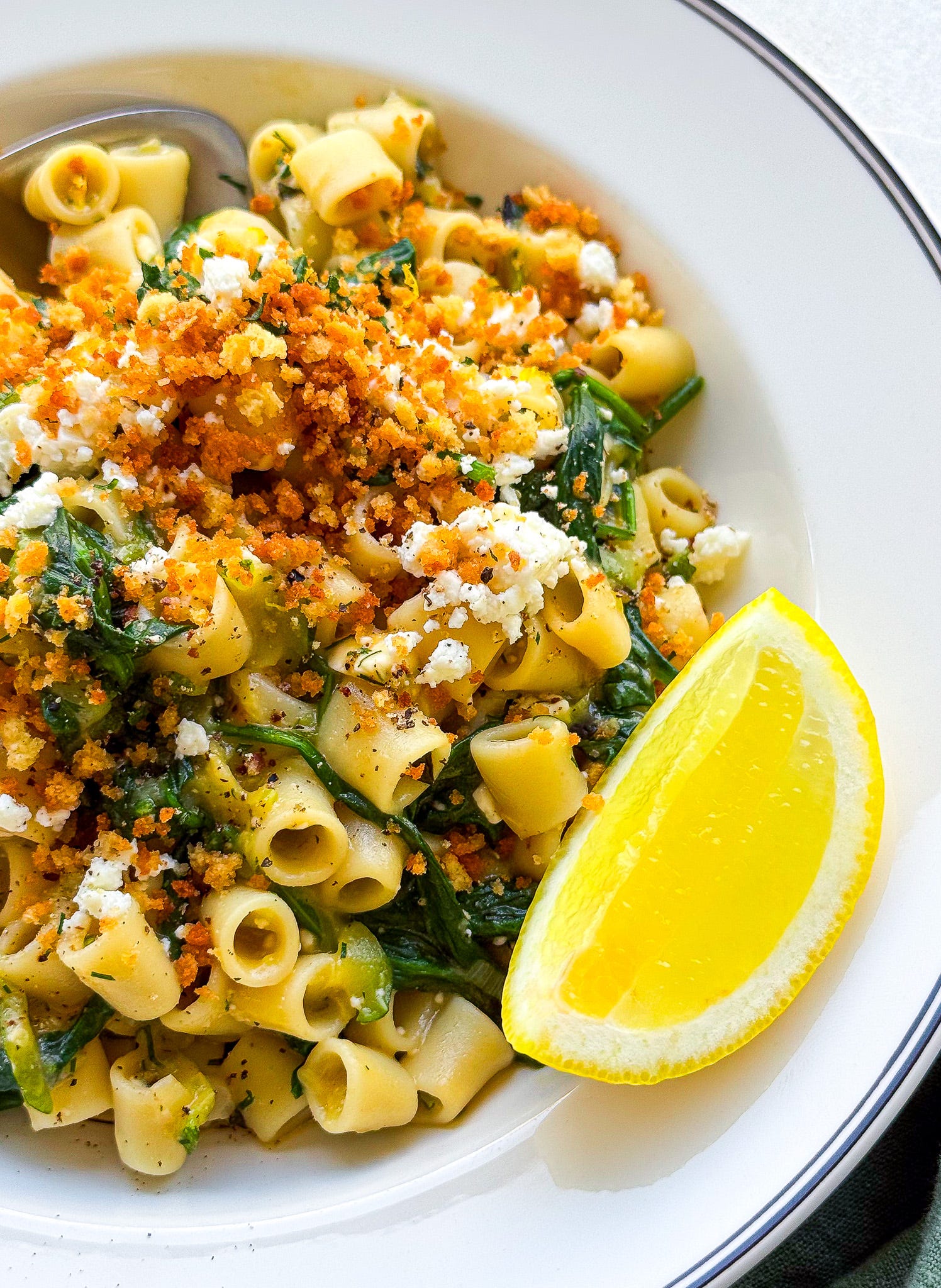
This is, of course, a pasta recipe, and so we must also stop in Italy. Not only that, it’s a one-pot pasta recipe—a phrase that, I’ll admit, makes me cry a little, mostly for its overuse. Although you won’t find many one-pot pastas in Italy, you will find them, and it’s a technique that I thought made sense here, considering I’ve opted for ditalini, a spoonable pastina that is often cooked directly in broth. Cooking pasta in broth also brought to mind risotto, and particularly risotto con zucchine (zucchini risotto)—a northern Italian classic gone on holiday, with unctuous layers of aromatics, grated zucchini, wine, and stock wrapped around starchy short-grain rice and finished with butter and Parmigiano. Here, the tiny pasta tubes similarly drink in their flavorful cooking liquid while releasing starch to transform a once-watery base into a creamy sauce, helped along by the same finishing touch of butter and cheese. There is, to someone’s relief, far less stirring than risotto, and the whole thing comes together in about 20 minutes.
You can, as always, follow this recipe to the letter or use it as a guide. Some of my measurements offer ranges to encourage you to tailor it to your liking (not everyone loves dill as much as I do, after all). As for the spinach, use as much as you’d like, because let’s face it: spinach has mastered the world’s greatest disappearing act. Be sure not to skip the breadcrumbs—the crunchy, toasty equivalent of that phyllo crust—or the lemon, which brings it all together and might just trick your taste buds into thinking that you, too, are sitting on a rooftop overlooking one of the greatest vestiges of the ancient world.
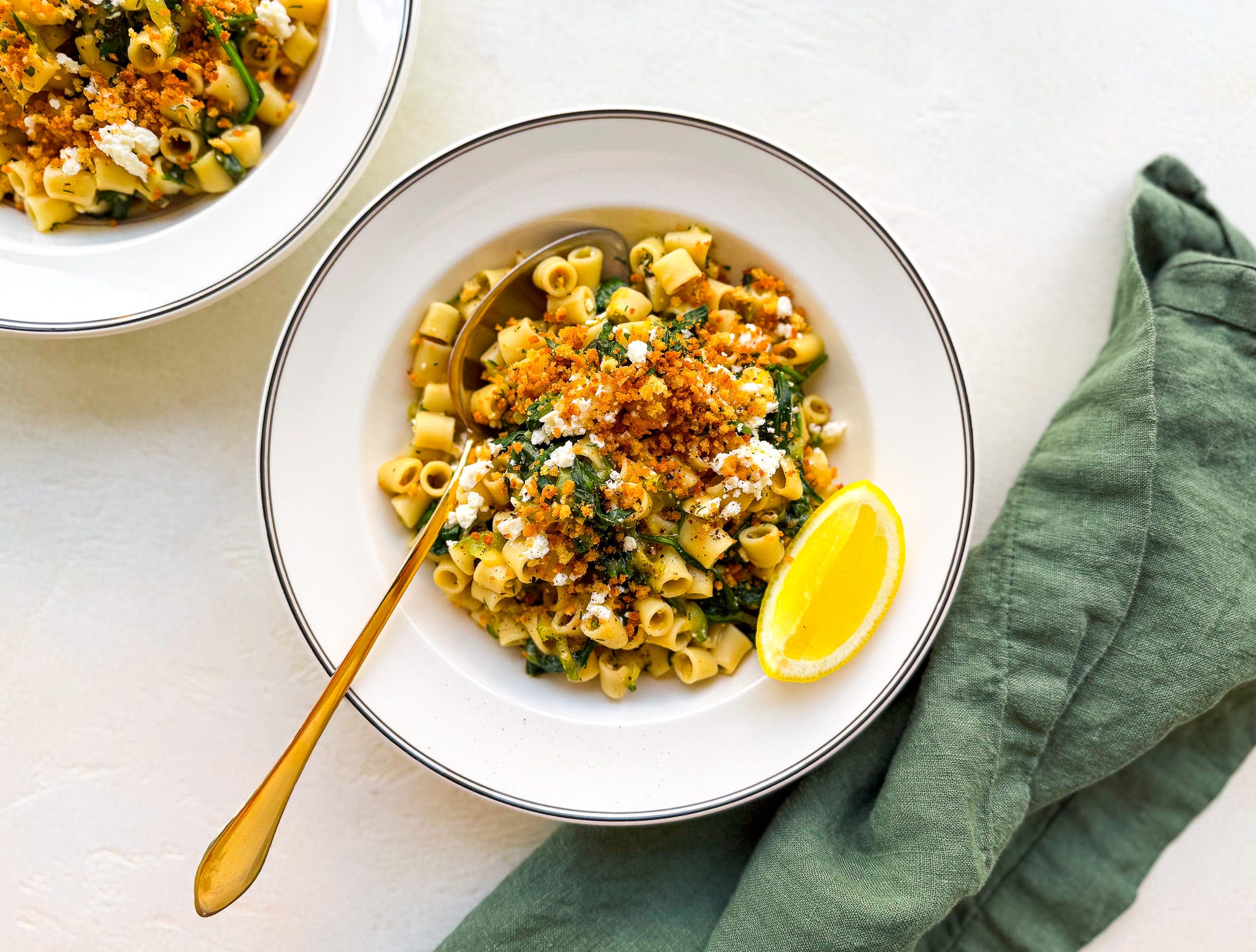
Spanakopasta
Serves 2 to 4